Underfloor Heating in Malta: Running Costs, Wet vs Electric, and Is It Worth It?
Wet or electric underfloor heating in Malta? How each system works, what drives running costs, and when it makes sense for your home.

Underfloor heating in Malta used to be seen as a luxury reserved for colder countries. That is changing. Anyone who has lived through a Maltese winter in a stone-built house or a ground-floor apartment knows the cold comes up through the tiles, and that damp, chilly air can make a room feel far colder than the thermometer says. Underfloor heating tackles that problem at the source.
Why underfloor heating suits Maltese homes
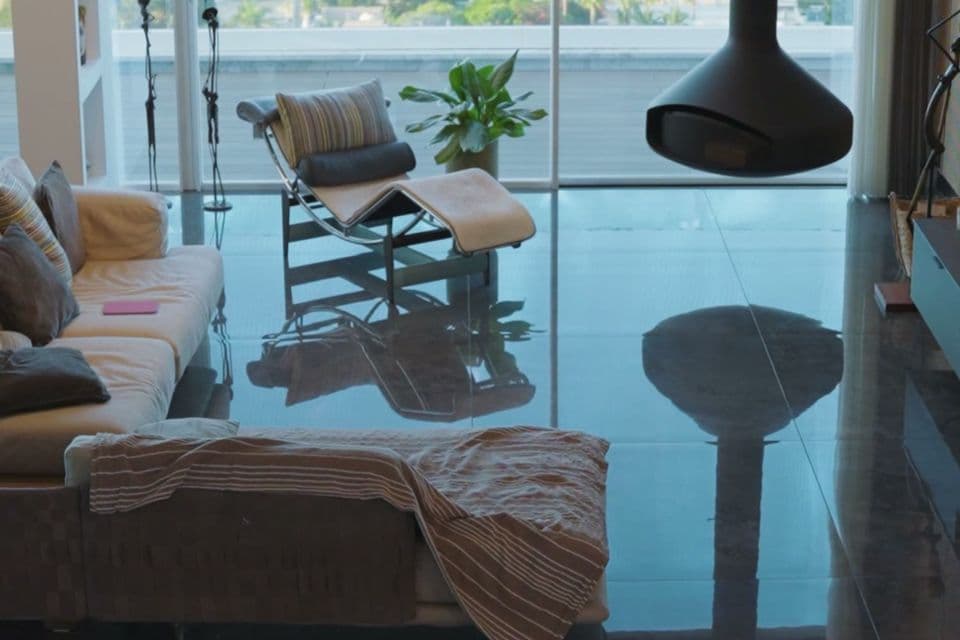
Most Maltese homes have hard floors: porcelain tiles, ceramic, stone or micro cement. They are perfect for the summer heat, but in winter they feel cold underfoot and draw warmth away from the room.
Underfloor heating turns the floor itself into a large, low-temperature radiator. Instead of blowing hot air around (as an air-conditioning unit on heat mode does), it warms the surfaces and the people in the room directly. The result is:
- Even warmth from floor to head height, without hot and cold spots
- No draughts or dry air, which many people notice with split units
- No visible radiators, so walls and furniture layouts are free
- Gentle drying effect on floors, which can help in damp ground-floor rooms during the rainy season (October to February)
Wet vs electric systems
There are two broad families of underfloor heating. Both can work well in Malta; the right choice depends on the size of the project and how the property will be used.
Electric (dry) underfloor heating
Electric systems use thin heating cables or mats laid on the subfloor, usually under the tile adhesive or within a thin levelling layer.
Pros:
- Lower installation cost and simpler to fit
- Very thin build-up, so it suits renovations where floor height is tight
- Ideal for single rooms such as bathrooms, kitchens or an en-suite
- Quick to warm up
Cons:
- Running costs are tied directly to electricity use, so heating large areas for long periods can get expensive
- Less efficient for whole-house heating
Wet (water-based) underfloor heating
Wet systems circulate warm water through pipes embedded in a screed. The water is heated by a boiler or, more commonly in newer projects, a heat pump.
Pros:
- Usually cheaper to run over large areas, especially with a heat pump
- Well suited to whole-floor or whole-house heating
- Very comfortable, steady heat thanks to the thermal mass of the screed
Cons:
- Higher upfront cost and more involved installation
- Needs a deeper floor build-up (insulation, pipes and screed)
- Slower to respond, so it works best when run on a sensible schedule rather than switched on and off
Quick comparison
| | Electric | Wet |
|---|---|---|
| Best for | Single rooms, renovations | Whole floors, new builds, shell-to-finish projects |
| Install cost | Lower | Higher |
| Running cost | Higher per square metre over time | Typically lower, especially with a heat pump |
| Floor build-up | Thin | Deeper |
| Warm-up time | Fast | Slower, but steady |
What drives running costs
Running costs can vary widely, and a fixed monthly figure without seeing the property is a guess. These are the factors that matter most:
- Insulation under the system. Without proper insulation below the pipes or cables, a lot of heat is lost downwards into the slab. This is the single biggest factor.
- Insulation of the building envelope. Uninsulated roofs and single-glazed windows let heat escape. See our notes on liquid membrane and insulation if your property has a flat roof.
- Heat source. A heat pump feeding a wet system is generally far more efficient than direct electric heating.
- Floor finish. Tiles, stone and micro cement conduct heat very well. Thick timber or rugs slow it down.
- How you use it. Heating a few rooms for a few hours on cold evenings costs much less than running the whole house all day.
- Controls. Room thermostats and timers make a real difference.
As a rough indication only, electric mats for a single bathroom are typically a modest investment, while a full wet system with a heat pump for an apartment or house is a larger project that can vary widely in price. The real figure depends on the site, floor area, build-up and heat source, so it is always best to ask for a free quote after a site visit.
Floor build-up and screed
Underfloor heating is only as good as the floor it sits in. For wet systems, the typical build-up is:
- A level, clean slab
- Insulation boards
- Pipes clipped or fixed in place
- A screed laid over the pipes
- The final floor finish
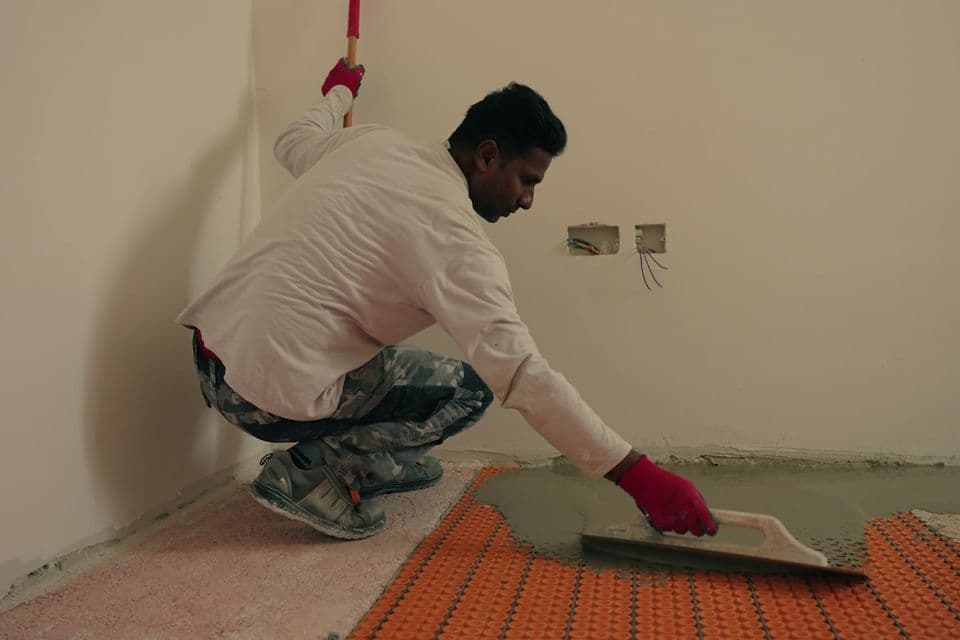
The screed matters. It needs to fully encapsulate the pipes with no voids, be the correct thickness, and cure properly before the system is commissioned. Many installers use a self-levelling screed for this, because it flows around the pipes and gives a very flat surface for tiling or micro cement.
Floor height is a key planning point in Maltese apartments, where door thresholds, balconies and existing levels can limit how deep you can go. This is one reason it pays to plan underfloor heating early, ideally at shell stage.
Is underfloor heating worth it in Malta?
It tends to make most sense when:
- You are renovating or finishing a property from shell, so the floor is being laid anyway
- You live in a ground-floor apartment, maisonette or older stone house that feels cold and damp in winter
- You want a bathroom that is warm and dries quickly
- You prefer a clean look without radiators or extra wall units
It may be less worthwhile if you only need occasional heating in one room and the floors are already finished, in which case lifting tiles may not justify the cost.
Frequently asked questions
Can I use underfloor heating for cooling in summer?
Some wet systems linked to a heat pump can provide mild cooling, but it is limited and needs careful control to avoid condensation, which is a real risk in Malta's humid summers. Most homes still rely on air conditioning for cooling.
Can underfloor heating go under existing tiles?
Not without lifting them. Retrofitting usually means removing the floor finish and possibly the screed. A thin electric mat can sometimes be laid over an existing sound floor and tiled over, but this raises the floor level.
Do I need to leave the screed to dry before turning the heating on?
Yes. Screed needs time to cure, and the system should be brought up to temperature gradually when first commissioned to avoid cracking.
Thinking about underfloor heating?
Shaw Contractors installs underfloor heating as part of residential and commercial projects across Malta, together with the screed, tiling and finishes that go on top. If you would like advice on wet versus electric for your property, we are happy to arrange a free site visit and quote. Call us on +356 9949 8507 or get in touch.